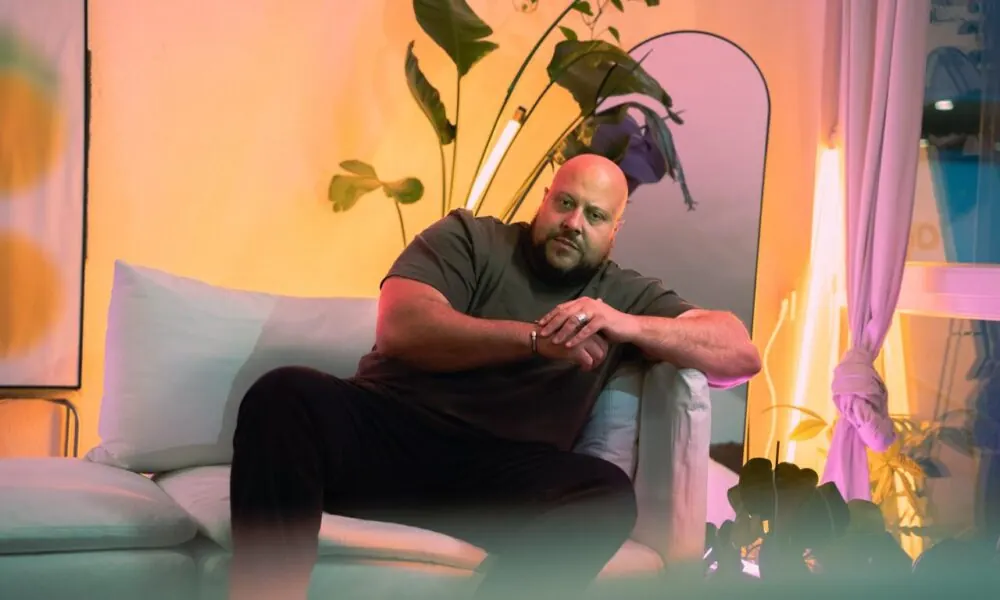
Grammy-recognized Afro House pioneer Boddhi Satva called in from Lisbon to discuss his Central African Republic roots, the album trilogy that defined his sound, and his honest take on where the genre stands in 2026. He also has a new album coming called Closure, and the name says everything.
From Bangui to Brussels via Kevin Yost
Boddhi Satva was born and raised in Central African Republic in what he describes as a warm, familiar environment. Music was everywhere at home. His dad was soul and funk. His mum was Beatles and open-spectrum pop. But the deeper influence came from Bria, 600 kilometers from the capital. In the evenings you would hear women preparing food, percussions transmitting messages between villages like Morse code, the river. Constant sound but not noise. The sound of life.
He started in hip-hop, but the moment that changed everything came just before he left for Belgium to study. His uncle brought home Kevin Yost's One Starry Night. He had never heard anything like it. Rhythmically complex, soulful, no vocals, just extraordinary layered percussion and deep textures. It rewired everything he thought music could be. Around 18 or 19 he discovered Alton Miller's Sweet in the Morning. Miller eventually became his mentor. They were roommates for almost four years.
The Parent-Tribute Trilogy
Invocation took nearly a decade to build. Louie Vega signed him and believed in what he was doing before he fully did himself. That album would not exist without him, Boddhi says. Two people made the connection happen: Louie Lou Gorbea and Mr. V. Boddhi had done a remix with Mr. V, Louie heard it and loved it, released it, and that was the start.
Transition came after his father passed in 2014. Before that he was almost militantly underground, complex to the point of being counterproductive. His dad always told him to make it more digestible. While making Transition, he felt like his father was in the studio with him. It cracked him open. DAVIDO, DJ Arafat, Nelson Freitas, Paul Randolph, Teedra Moses, incredible people came through out of pure love. That album turned him from a raw diamond into a polished one.
Then his mother passed in 2022. Manifestation became her tribute. He had promised her he would get a Grammy with that album. He did not win, but it entered the competition. Being in the same category as Arctic Monkeys and Bjork felt like its own kind of blessing.
Afro House in 2026: Gentrified and Gatekept
Afro House had its biggest year in 2025, and Boddhi Satva has strong feelings about where the genre is right now. We all knew it was coming, he says. It was always a matter of timing, boldness, and being in the right place. Look at what Black Coffee was doing well before his global rise. The South African invasion at WMC around 2009 to 2011 was already a frenzy. It just was not global yet.
Now it is everywhere and the sound has been gentrified. If you love the music and you are good at it, do it. But some of us sacrificed a lot building this. When someone taps in for the hype cycle and taps out, the underground ecosystem absorbs that damage. Doors are opening for a select few superstars, not for the community. Underground DJs are still getting offered $100 a show.
His new album Closure is about closing chapters that have been open too long. The past several years have been a journey with a lot of weight. This album is the exhale. Musically he is feeling J Electronica right now, the way he builds worlds through samples and cinematic atmosphere.

Community Signals
Login or Sign up to broadcast on this frequency.
> No signals detected on this frequency.