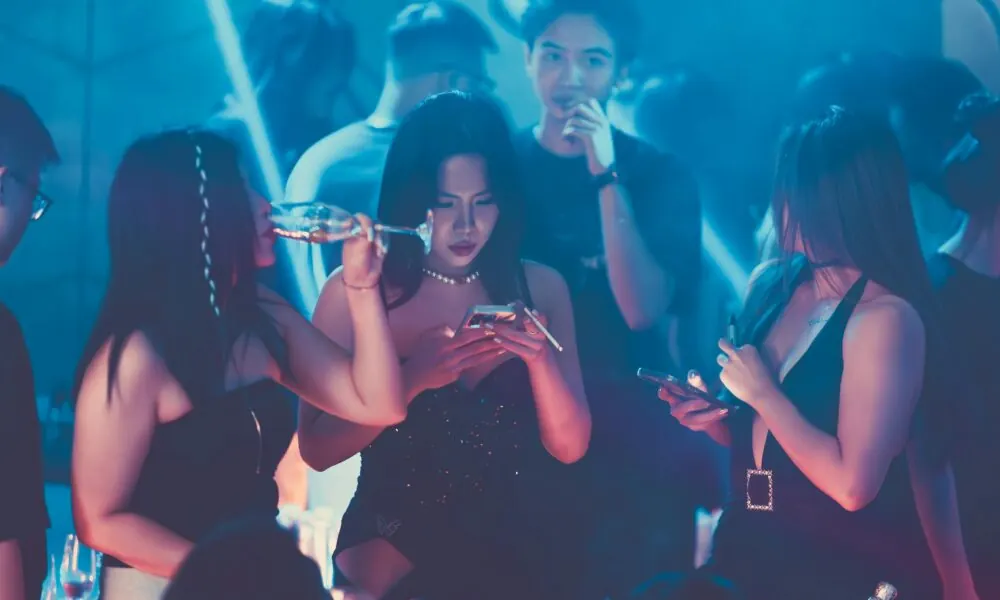
From Social Media to the Dance Floor
Traditional nightlife relied on local venues and word-of-mouth discovery. Digital platforms have expanded that model without replacing it. Many club nights now begin online, where audiences save event announcements, follow DJs before shows, share playlists, and join genre-specific communities. Livestream clips often precede ticket purchases.
This digital activity tends to increase interest in physical experiences rather than diminish it. A listener interested in underground house, techno, or hip-hop can explore global scenes instantly. Smaller communities gain visibility faster, and trends move across cities more quickly than in previous decades.
Interactive Experiences Replace Passive Observation
Venues are experimenting with audience song voting systems, interactive visuals, QR-activated content, gamified event challenges, and digital loyalty programs. These ideas reflect wider trends in gaming and streaming, where audiences expect involvement rather than observation.
Immersive technology is reshaping physical environments as well. Augmented reality, projection mapping, and responsive lighting systems allow venues to create evolving spaces. Walls change visuals during performances, lighting reacts to crowd movement, and projection art syncs to music tempo. Hybrid events now combine live audiences with digital viewers through livestreams and virtual after-parties.
AI Tools Support DJs and Venue Operations
Artificial intelligence applications in nightlife remain practical rather than creative. Analytics tools help identify crowd movement, dance floor activity, energy changes, and engagement patterns. Human DJs still lead creatively, but technology provides additional information.
Recommendation systems increasingly shape event discovery based on listening history, previous attendance, genre interests, and location trends. Behind the scenes, AI supports capacity monitoring, lighting efficiency, crowd flow analysis, ticket forecasting, and safety management.
Social Media Accelerates Genre Exposure
Short video content has accelerated how smaller scenes reach international audiences. Platforms now influence music discovery, fashion choices, venue popularity, dance trends, and event visibility. Venues increasingly design environments that support both atmosphere and visual storytelling, with immersive lighting rooms, digital art installations, and themed visual spaces.
The shift reflects how digital participation influences community identity and shared experiences. Some critics argue that constant documentation may shift focus away from live engagement, though the balance between online and offline participation continues to evolve.

Community Signals
Login or Sign up to broadcast on this frequency.
> No signals detected on this frequency.