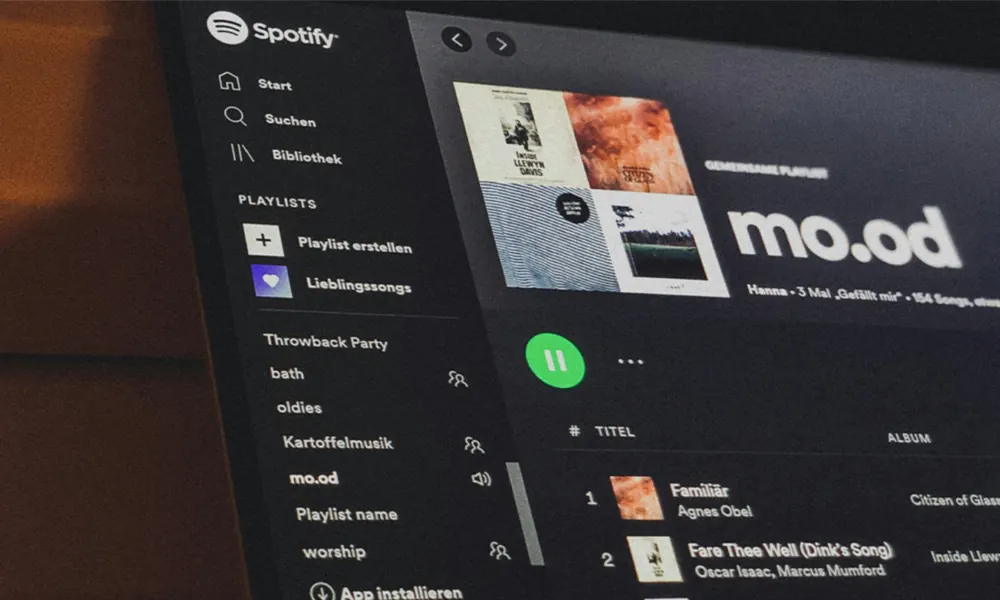
The Spotify playlist promotion market is crowded with services that violate the platform's terms of service. Fake playlists with inflated follower counts, bot-driven streams that disappear when Spotify's detection systems catch up, and pay-per-add arrangements where curators process submissions for a fee without actually listening. All of it can cost a release its streaming data after the fact, and all of it is widely sold to independent artists who don't yet know what the difference looks like.
Legitimate services do one specific thing: they charge for curator outreach and review, not for guaranteed results. They let curators say no. They don't promise stream counts. And when a campaign ends, you can point to something verifiable — a review you received, a playlist you can actually find, a placement on a channel with real listeners.
SoundCampaign: Pay-Per-Review With Multi-Channel Support
SoundCampaign charges only for reviews that actually finish, and returns credits automatically when they don't. Genre matching is automatic. Written feedback comes back with every completed review, which stays useful even when a track doesn't get added — it tells you how the music is landing with real listeners in your target genre. For artists releasing consistently, that signal compounds.
Beyond playlists, SoundCampaign handles TikTok creator campaigns and fully managed Meta Ads from the same dashboard, making it the most complete release coordination tool available. One honest limitation: if Spotify is your only channel and you want to select curators yourself, a self-serve platform costs less per pitch.
PlaylistPush: High Floor, Large Network
The minimum campaign on PlaylistPush is $285. That floor rules out a large portion of independent artists — anyone running their first promotion campaign, anyone on a tight single-release budget, anyone not yet sure whether this particular track is ready for that kind of investment.
What the $285 minimum buys is access to 4,600 vetted independent playlists, algorithmic matching by genre and mood, and reporting that shows every curator's decision: accepted, declined, or no response. Most managed services tell you what got added. PlaylistPush tells you what didn't, and why — which means even a campaign with a modest acceptance rate comes back with useful data about how the track is landing. Spotify only. No press, no radio, no TikTok.
SubmitHub: Self-Serve With Cross-Channel Reach
SubmitHub offers 1,800 curators, searchable by genre, outlet type, and acceptance rate. That acceptance-rate filter matters: a curator who adds 2% of submissions is a fundamentally different target than one who adds 30%, and SubmitHub lets you see that upfront before spending a single credit.
Standard credits get you a yes or no; premium credits require written feedback within a defined response window. Early in a release cycle, when you're trying to understand what's landing, premium credits tend to earn their price. Later, when testing reach at volume, standard makes more sense. SubmitHub also covers music blogs and radio stations alongside playlists, which means a single campaign can reach curators across multiple channels at once. The catch is that the work is entirely yours — no algorithm choosing curators for you, no managed outreach running in the background.
Groover: Guaranteed Feedback or Your Money Back
On most submission platforms, silence is a valid outcome. The window opens, you pitch, the window closes, nothing comes back, and the credits are spent. Groover was built specifically to eliminate that. Submit to any of the 3,000 music professionals in the network and written feedback arrives within seven days — or your credits come back automatically. No exceptions.
That shifts what you're paying for. On most platforms, you pay per pitch sent. Groover charges per response received. European coverage is particularly strong — playlist curators, music bloggers, radio stations, and label scouts across France, Spain, Germany, and beyond. At roughly $1.07 per credit, it's not the cheapest per-submission option. But once silence isn't a possible outcome, the math changes.
All four services differ significantly in model, price, and focus, but each one sells what it says it does: curator outreach and real feedback, not fake placement or inflated stream counts.

Community Signals
Login or Sign up to broadcast on this frequency.
> No signals detected on this frequency.