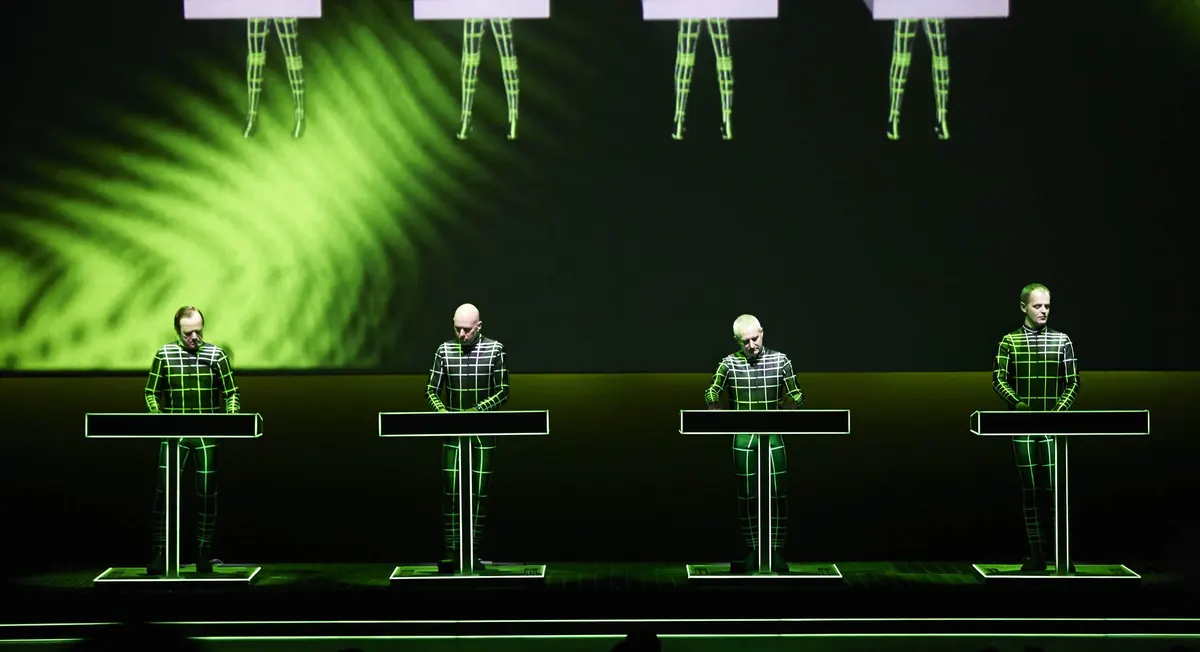
Federal Court Rules Sample Constitutes Creative Reinterpretation
Germany's Federal Court of Justice ruled against Kraftwerk in a copyright dispute nearly 30 years in the making. The court found that a two-second sample was permissible under the "pastiche" exception, which allows artists to sample existing works without permission when doing so constitutes a creative tribute or dialogue with the original.
Three Decades of Legal Wrangling Over "Metall auf Metall"
The case centers on producer Moses Pelham's use of a rhythmic passage from "Metall auf Metall," a 1977 track appearing on the band's sixth album, Trans-Europe Express, which uses metallic percussion to mimic a moving train. Pelham slowed the two-second sample slightly and looped it throughout "Nur Mir," a song released by German rapper Sabrina Setlur two decades later, setting off a legal dispute that has passed through various courts since 1999.
A pivotal shift came in 2023 when the German Federal Court of Justice asked the European Court of Justice to weigh in. The highest court of the EU ruled that sampling is permissible if it imitates, pays tribute to or otherwise engages with the original. The former applied that standard Thursday, finding that Pelham's transfer of the electronic element into a different genre constituted a creative reinterpretation.
Implications for Sample-Based Production
For music producers across Europe, the ruling offers clearer legal footing for sample-based work while stopping short of a blanket exemption. Counsel for Pelham said that "sampling is expressly recognized as a means to that end" and that "no particular intention on the part of the artist is required; it is sufficient that the pastiche character is recognizable to listeners who know the original."
Ralf Hütter, Kraftwerk's lead singer and keyboardist, lamented the decision in a statement released by his attorneys. "In his view, the crucial question remains unanswered: when does the use of third-party material genuinely constitute an independent, creative and artistic dialogue, and when is it simply illegal sampling intended to avoid the original author's creativity, effort and labor, as well as the cost of obtaining the relevant license?" Hütter's team said.
Kraftwerk's counsel noted that Pelham remains liable for damages awarded in the prior German proceedings, adding that the latest ruling does not overturn that order.

Community Signals
Login or Sign up to broadcast on this frequency.
> No signals detected on this frequency.