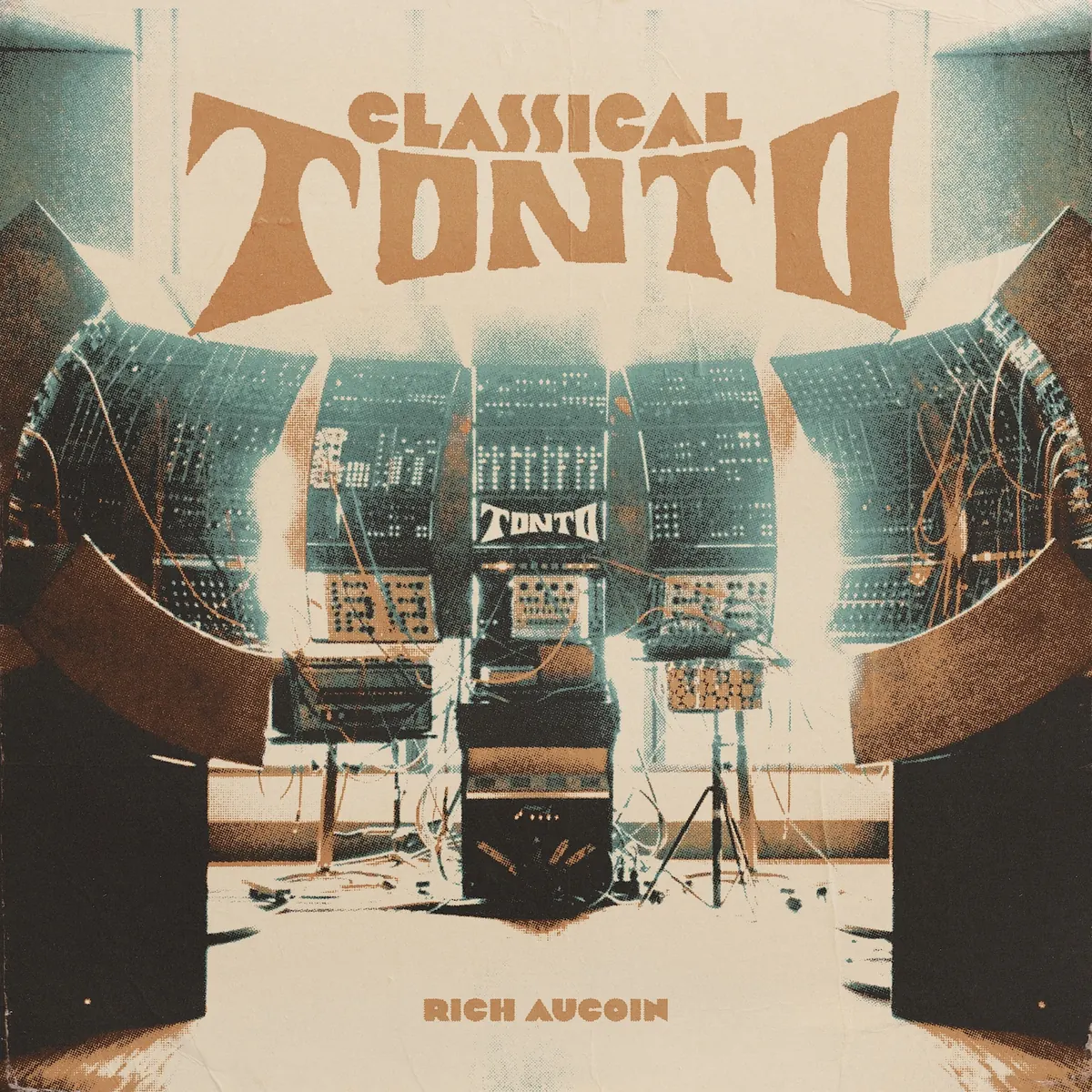
Canadian producer Rich Aucoin has released Classical Tonto, an album that reinterprets works by Bach, Beethoven, Satie, and Debussy using TONTO—one of the most significant pieces of hardware in electronic music history.
From Festival Floors to Concert Halls
The album follows Aucoin's Synthetic, a quadruple album that picked up two Juno nominations. Where that project leaned into festival and club sensibilities, Classical Tonto pulls in the opposite direction, moving from dance floors back toward the concert hall.
TONTO stands for The Original New Timbral Orchestra, and it holds the distinction of being the first—and still the largest—multitimbral polyphonic analog synthesizer ever built. Malcolm Cecil spent years assembling it during the 1970s, and it went on to appear on records by Stevie Wonder, Gil Scott-Heron and Brian Jackson, and Quincy Jones, as well as the score for Brian De Palma's Phantom of the Paradise. It's a sprawling, room-filling instrument rather than a compact synth, and getting hands-on time with it isn't something that happens often.
Classical Training Meets Vintage Hardware
What makes the project feel personal rather than academic is Aucoin's background—he trained classically on piano at a Toronto conservatory, and several of the pieces he's reworked here are ones he actually performed at recitals growing up. Hearing Beethoven's Sonata No. 14 or Debussy's 'Clair de Lune' run through decades-old analog circuitry is a different proposition when the person behind the board has spent years playing those same pieces on acoustic piano.
"Hearing these favourite famous classical pieces played on this historic rare synthesizer in that museum was such a privilege," Aucoin said. "I hope that I was able to capture the magic in that room in the recordings and their arrangements."
Crackle and Texture
The album was produced by Aucoin alongside Gordon Huntley of Leaving Laurel, continuing a working relationship built around vintage synth exploration. Aucoin's own suggestion for how to approach the record is straightforward: put it through a proper hi-fi system at volume and let the crackle and texture of TONTO's ageing circuitry come through.
Classical Tonto is out now.

Community Signals
Login or Sign up to broadcast on this frequency.
> No signals detected on this frequency.